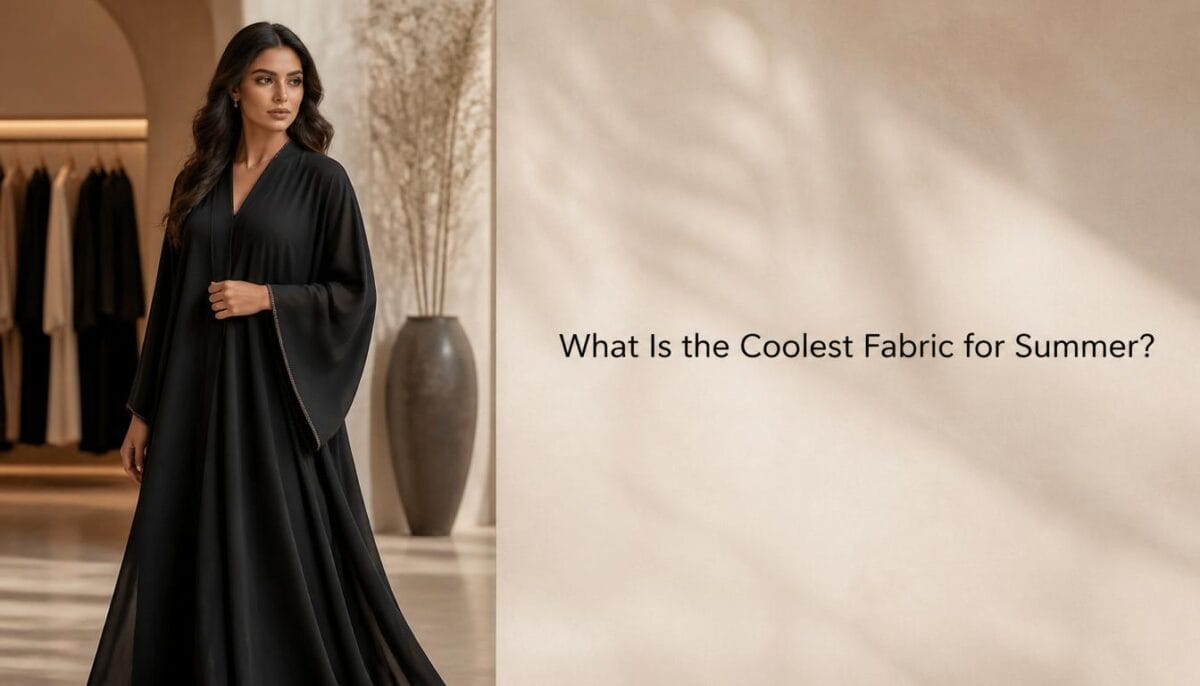
The fabric listed for an abaya can affect how it feels in warm weather, but comfort also depends on the garment’s weave, lining, cut, fit, activity, and personal preference. Check the product details and care label when comparing options.
A thin fabric is not automatically the most comfortable choice. Look at the specific fabric construction, lining, opacity, and drape; product descriptions can help, though they do not guarantee how a garment will feel in every setting.
For warm weather in Saudi Arabia and the Gulf, shoppers may compare options such as Nada, cotton, linen, and crepe. Their feel and care needs vary by weave, weight, blend, and finish, so check each garment’s details.
This guide outlines factors to compare when choosing an abaya for warm weather, including fabric details, lining, cut, care instructions, and intended use.
Why Does Fabric Matter During Summer?
The same weather can feel different depending on the clothing, activity, and individual preferences.
Fabric construction and garment layers can affect airflow and comfort. Compare the full garment rather than relying on a fabric name alone.
In warm or humid conditions, clothing that feels heavy or has multiple layers may be less comfortable for some people. Lining, fit, activity, and personal sensitivity also matter.
When comparing abayas, look at the fabric weight, weave, lining, and fit. These details may help you judge whether a particular piece suits your planned use.
What Makes a Fabric Feel Cool?
Several details can influence how a fabric feels; product-specific construction matters as much as its name.
Breathability
Weave and garment construction can affect airflow. Product descriptions may identify these details, but the feel can vary between garments.
Cotton, linen, and lightweight blends come in varied constructions. Check the specific garment’s description and lining before comparing them.
Lightweight Construction
A garment’s weight and cut can affect how it feels during extended wear. Consider coverage, lining, and how you plan to use it.
Moisture Management
Moisture and temperature comfort varies by fabric construction, activity, and personal preference.
Different fabrics handle moisture differently. Check the garment description and care label rather than assuming a fiber name predicts performance.
Soft Texture
Texture is one factor in comfort. If possible, assess the fabric directly; online descriptions cannot establish how it will feel for every wearer.
Loose Weave
Weave and lining affect both airflow and opacity. Review product details to understand the garment’s construction and coverage.
The Best Summer Fabrics for Abayas
Abaya fabrics vary in weight, finish, lining, and care needs. Choose by the details of the specific garment and how you plan to wear it.
The sections below describe considerations shoppers may compare; they are not a ranking of all fabrics or products.
- Nada Fabric
“Nada” is a fabric name used for some abaya products, but composition and construction can differ by supplier. Review each product listing for its actual details.
The feel, drape, and everyday suitability depend on the particular fabric and garment design.
Before choosing, compare the garment’s listed composition, weight, lining, and care instructions. Do not assume all products sold under the same fabric name have identical qualities.
Advantages
- Soft and comfortable
- Elegant appearance
- Good airflow
- Suitable for everyday use
- Wrinkles less than linen
Disadvantages
- Quality varies between manufacturers.
- Premium versions cost more than basic fabrics.
A specific Nada abaya may suit your needs depending on its construction and care requirements; compare the product details before deciding.
- Linen
Linen garments vary in weight, weave, and finish. Review the product details to see whether a particular piece suits your intended use.
Linen’s feel and care needs depend on its construction and any blend or finish. Follow the garment’s care label.
Its slightly textured appearance gives clothing a relaxed yet sophisticated look.
Possible considerations
- Outstanding breathability
- Extremely cool
- Excellent moisture absorption
- Durable
- Environmentally friendly
Disadvantages
- Wrinkles easily
- Requires more ironing
- Can feel stiff before repeated washing
If considering linen, review the specific garment’s weight, finish, and care instructions; products can differ.
- Cotton
Cotton is used in many garment types, with varied weights, weaves, and blends.
It is soft, breathable, and comfortable enough for daily use.
The feel and moisture handling of a cotton garment depends on its construction and the wearer’s activity. Check product details and care instructions.
Advantages
- Comfortable
- Breathable
- Easy to wash
- Affordable
- Suitable for sensitive skin
Disadvantages
- Can retain moisture if it becomes very wet.
- Heavy cotton fabrics may feel warmer than lightweight versions.
Compare the listed weight and construction to choose a garment that suits your preferences.
- Crepe
Crepe describes a range of textures and fabric constructions.
The feel of crepe varies with weight, weave, blend, and lining. Check the individual product description.
Heavy crepe, however, may become too warm during extremely hot weather.
If a listing describes a crepe garment as suitable for summer, check its weight and lining as well.
- Chiffon
Chiffon is often described as lightweight, though construction and opacity vary.
Check the product details for opacity and lining, especially when considering chiffon for a full abaya.
A lined chiffon garment may have a different weight and feel than an unlined piece; assess the details of the specific design.
- Rayon (Viscose)
Rayon (viscose) is a manufactured fiber made from regenerated cellulose.
Rayon garments vary in feel, composition, and care requirements. Read the item’s material details and label.
The drape and feel of rayon depend on the fabric construction and blend. Review the product information rather than relying on a general label.
Follow the care label, as washing and drying requirements vary between rayon garments.
- Bamboo Fabric
“Bamboo fabric” may refer to different textile products and processes. Check the listed fiber composition and product details.
Texture and moisture handling vary between products marketed with bamboo-derived fibers.
Although they usually cost more than cotton, many people consider them worth the investment for hot climates.
Bamboo fabrics are also appreciated for their softness on sensitive skin.
How to Compare Fabrics for Saudi Weather
Saudi Arabia experiences different weather conditions depending on the region.
Jeddah’s coastal weather can be humid. When comparing abayas, consider fabric weight, lining, cut, and your own comfort preferences; no fabric choice guarantees a particular result.
For Riyadh and other drier locations, shoppers may still want to compare weight, lining, and cut, as indoor air conditioning and individual preferences also affect comfort.
If moving between air-conditioned and outdoor spaces, consider the garment’s layers and how it fits your planned activities.
Local weather is one factor to consider alongside the garment’s construction, your activity, and personal preference.
The Best Summer Fabrics for Abayas
Appearance, construction, lining, and care instructions can all inform a fabric choice. Compare specific products and intended use rather than relying on broad claims about a fiber.
The following comparison is a starting point only. Actual products vary, and comfort is personal.
- Nada Fabric
Nada fabric is one of the most popular choices for abayas throughout Saudi Arabia and the Gulf region. It is loved for its balance of elegance, comfort, and practicality.
Its smooth texture, lightweight feel, and graceful drape make it suitable for both casual and formal abayas. Premium-quality Nada fabric also provides good airflow, helping you stay comfortable during warm days.
Advantages
- Soft and comfortable against the skin
- Elegant, flowing appearance
- Lightweight with good breathability
- Suitable for everyday wear
- Wrinkles less than many natural fabrics
Disadvantages
- Quality varies between manufacturers
- Premium versions are usually more expensive
If you’re looking for an abaya fabric that combines style and comfort, Nada fabric is one of the best all-around choices for summer.
- Linen
Linen has been trusted for centuries in hot climates because of its exceptional cooling properties. Made from flax fibers, linen naturally allows air to circulate while absorbing moisture and drying quickly.
Its slightly textured finish gives abayas a relaxed yet sophisticated appearance, making it a favorite for warm-weather fashion.
Advantages
- Excellent breathability
- One of the coolest fabrics available
- Highly absorbent
- Quick drying
- Durable and long-lasting
Disadvantages
- Wrinkles easily
- Requires frequent ironing
- May feel slightly stiff when new
Although it needs a little more maintenance, linen remains one of the best fabrics for extremely hot weather.
- Cotton
Cotton is one of the most widely used fabrics in the world thanks to its comfort, softness, and versatility.
Lightweight cotton allows heat to escape while absorbing moisture, making it an excellent option for everyday summer wear.
Advantages
- Soft and breathable
- Comfortable for long hours
- Easy to wash and maintain
- Suitable for sensitive skin
- Affordable and widely available
Disadvantages
- Can hold moisture if heavily soaked with sweat
- Thick cotton fabrics may feel warmer than lightweight versions
For the best summer comfort, choose lightweight cotton rather than heavier cotton blends.
- Crepe
Crepe is available in many different textures and weights, making it important to choose the right type for summer.
Lightweight crepe offers beautiful movement and an elegant appearance while remaining comfortable in warm weather. Heavier crepe fabrics, however, may trap more heat and are generally better suited for cooler seasons.
When shopping, always check whether the crepe is specifically designed for summer wear.
- Chiffon
Chiffon is known for its incredibly lightweight feel and elegant appearance.
Because many chiffon fabrics are semi-transparent, they are commonly used for sleeves, overlays, or occasion abayas rather than everyday designs. When combined with a breathable lining, chiffon creates graceful summer outfits without adding unnecessary weight.
- Rayon (Viscose)
Rayon, also known as viscose, is produced from natural cellulose fibers that are processed into a soft, smooth fabric.
It drapes beautifully, feels cool against the skin, and provides good comfort during warm weather. High-quality rayon is often chosen for stylish summer clothing because it combines softness with a luxurious appearance.
However, lower-quality rayon may wrinkle easily or lose its shape after repeated washing.
- Bamboo Fabric
Bamboo fabric has become increasingly popular thanks to its silky texture and excellent moisture management.
It feels exceptionally soft, helps regulate body temperature, and remains comfortable even during long hours of wear. Although bamboo fabrics are often more expensive than cotton, many people consider them worth the investment for their premium comfort.
Which Fabric Is Best for Saudi Summers?
The best fabric often depends on where you live.
In humid cities such as Jeddah, breathable fabrics that manage moisture effectively—like linen, lightweight cotton, and premium Nada fabric—help reduce the sticky feeling caused by humidity.
In drier regions such as Riyadh, lightweight crepe, cotton, linen, and Nada fabric all perform exceptionally well, especially when paired with loose-fitting abaya designs.
For the Eastern Province, where humidity can also be high, lightweight and breathable fabrics remain the most comfortable option throughout the summer months.
Comparing the Best Summer Fabrics
Fabric names alone do not establish breathability, weight, wrinkle resistance, or suitability. Compare the specific garment’s composition, weave, lining, weight, and care instructions.
There is no single best fabric for every wearer or setting. Compare the composition, weight, weave, lining, cut, and care requirements of the actual abaya.
The Best Fabric for Every Occasion
Intended use can help narrow your choice. Review the garment details and consider where and how you expect to wear it.
Best Fabric for Everyday Wear
For daily wear, compare the garment’s weight, fit, lining, and care requirements with your routine.
Best Fabric for Office and University
For office or university wear, consider the garment’s cut, coverage, lining, and care needs alongside its appearance.
Best Fabric for Travel
For travel, check the care label, fabric weight, and how the garment packs; wrinkle resistance varies by product.
Best Fabric for Special Occasions
For occasions, compare the design, lining, coverage, and care instructions. Fabric names alone do not predict comfort or suitability.
Fabrics to Avoid During Summer
Some heavier or multilayer garments may feel less comfortable to some wearers in warm weather, but construction and personal preference matter.
Heavy Polyester
Polyester products vary widely. Consider the specific weight, weave, lining, and care instructions rather than excluding a fiber by name.
Velvet
Velvet garments are often heavier or lined, but products vary. Review the actual construction and intended season.
Heavy Wool
Wool garments vary by weight and construction; check the product details and intended use.
Thick Synthetic Blends
Blends vary in weight, weave, and finish. Assess the specific garment instead of making a decision from fiber category alone.
How to Identify a High-Quality Summer Fabric
When shopping, product details can help you compare composition, lining, weight, opacity, and care instructions.
Feel the Texture
If you can inspect the fabric, assess its texture according to your preference; softness is subjective.
Check the Weight
Consider whether the garment’s weight and construction provide the coverage you want.
Test the Breathability
Review product details for opacity and lining. Looking through fabric against light is not a reliable quality test on its own.
Observe the Drape
Drape depends on the fabric and design. Product images and descriptions can help you assess the silhouette.
Read the Fabric Composition
Check the listed fiber composition and care label. A fiber name alone does not establish quality or performance.
How to Care for Summer Fabrics
Follow the care label to maintain the garment according to its materials and construction.
- Wash delicate fabrics using cold or lukewarm water.
- Avoid excessive heat when drying, as it may damage certain fibers.
- Use a gentle detergent designed for delicate clothing.
- Store abayas on quality hangers to preserve their shape.
- Iron linen and cotton while they are slightly damp for the best results.
- Always follow the care instructions provided by the manufacturer.
Care needs vary by fabric and garment construction. Use the label as the guide.
Frequently Asked Questions
What is the coolest fabric for summer?
There is no single coolest fabric for every wearer. Linen, cotton, and other fabrics vary by weight, weave, blend, and finish; compare the specific garment details.
Is Nada fabric good for hot weather?
Nada products vary by construction and supplier. Check the product listing for composition, lining, and care information.
Is cotton cooler than polyester?
Cotton and polyester each include varied constructions. Compare the weight, weave, lining, and intended use of the specific garment.
Which fabric wrinkles the least?
Wrinkle resistance varies by product, blend, and finish. Check the care and fabric details for the garment.
Is linen better than cotton?
Neither is universally better; compare the specific products and their care instructions.
Which fabric is best for Saudi Arabia?
For Saudi weather, compare the construction, weight, lining, and care information of each abaya. Comfort varies by wearer and situation.
What is the best fabric for a black summer abaya?
For a black summer abaya, review its weight, lining, cut, and fabric details. Do not assume one fabric name guarantees less heat.
Are natural fabrics always better?
Natural and synthetic fibers both vary in construction and finish. Compare the product details and care requirements.
Final Thoughts
Choosing an abaya for warm weather involves more than selecting a light fabric. Compare its construction, lining, fit, intended use, and care instructions.
Nada, linen, cotton, and other fabrics are available in different constructions. Check the specific product information to decide whether it suits your needs.
Review composition and care details before purchasing. A fabric label alone cannot guarantee comfort, durability, or performance.