In this article
Abaya fabrics are the first thing that determines how an abaya feels on you: how it drapes, how much it creases, and whether it suits summer or special occasions. Many poor choices come from going by the fabric name alone, while the real difference lies in weight, weave, and finish. In this guide, we explain the most popular fabrics in plain language, how to care for them, and how to choose the one that suits you best.
In This Article
Common Abaya Fabrics: What’s the Difference?
Names differ from shop to shop, so go by feel and description rather than the name alone. These are the most popular types:
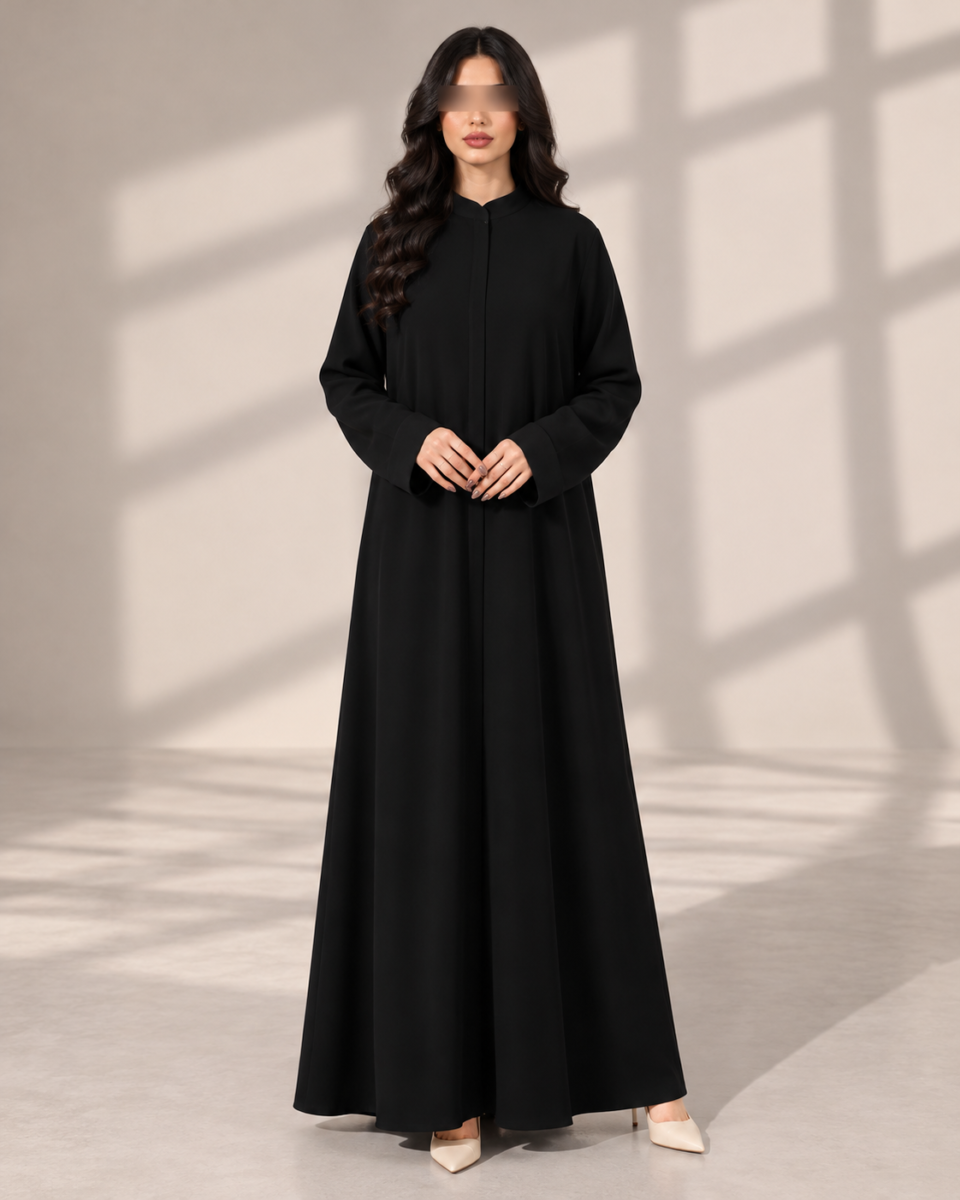
- Nida fabric: Soft, lightweight, and smoothly draping, usually made of synthetic fibers such as polyester. It’s very well suited to everyday wear, and JELENA’s plain black quarter-flared abayas are among those made from it.
- Crepe: Has a slightly pebbled texture and drapes well, and usually stands up to repeated wear without creasing much.
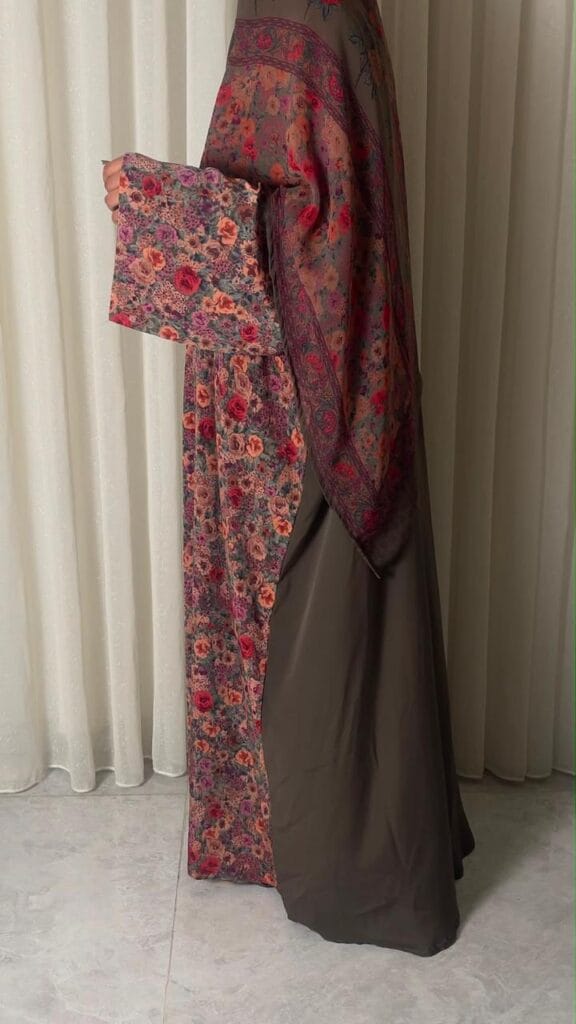
- Georgette and chiffon: Lightweight and semi-sheer, used far more for sleeves and extra layers than for a whole garment.
- Satin: Has a distinct sheen that creates a formal look, but it needs more careful handling and suits occasions more than work.
- Cotton and linen fabrics: Better breathability in summer, but they crease faster and need ironing after washing.
How to Choose Your Abaya Fabric by Use
Ask yourself: Where will you wear it most?
- For work and daily wear: A lightweight fabric that resists creasing and withstands washing, such as Nida or crepe.
- For occasions: A fabric that drapes elegantly or has a soft sheen, with details such as embroidery or distinctive sleeves.
- For summer: The lightest, most breathable weights; avoid thick fabrics that trap heat.
- For winter: A slightly heavier weight that gives warmth and holds its shape, such as warm brown shades.
How to Care for Abaya Fabric
Any fabric, however expensive, loses its shape if handled the wrong way. Stick to these simple rules:
- First, read the care label inside the abaya; it sets out the right way to wash and iron each fabric.
- Wash a black abaya on its own or with other black items, and don’t scrub it hard, so the color doesn’t fade.
- Don’t use a hot iron on embroidery or embellishments; iron from the inner side on low heat.
- Hang it on a wide hanger instead of folding it, so it keeps its drape.
- If there’s a stain, treat it quickly and gently, and if the fabric is delicate, leave it to a specialist.
A tip from experience: Don’t judge a fabric from a photo alone. Lighting and angle can change the color and texture, so it’s best to feel the fabric and see how it drapes on the body before deciding, or to compare photos from more than one angle if you’re ordering online.
And remember that quality doesn’t always mean a higher price. The right fabric for your use, with clean stitching and well-finished details, gives you an abaya that lasts longer and stays elegant after repeated washes.
Common Mistakes When Choosing Fabric
- Choosing an abaya by fabric name only, without reading the weight and description.
- Buying a sheer fabric for daily work wear without checking its coverage in daylight.
- Ignoring the care label, especially with embroidery or blended fabric.
- Relying on a single photo; it’s better to view the front, side, and details.
When buying from the online store, rely on the description, photos, and measurements published on the product page, and compare more than one piece. A photo shows you the look, but the fabric description, weight, and care instructions are what give you the right expectations for daily use.
It’s also best to start with a plain piece in a lightweight fabric, so you learn how to handle the fabric in washing and ironing, then add pieces with more detail such as embroidery and wide sleeves. This way you build a practical abaya wardrobe that serves you all season, and you avoid buying pieces that are beautiful but hard to care for.
You can see these fabrics on real pieces in JELENA’s Summer Abayas, Winter Abayas, and Black Abayas.
Frequently Asked Questions About Abaya Fabrics
What’s the Best Fabric for an Everyday Abaya?
Usually Nida or crepe, because they’re lightweight, comfortable, and stand up to repeated wear, as long as you pay attention to the care label.
How Can I Judge Fabric Quality Before Buying?
Touch the fabric and see how it drapes, look at the stitching and edges, and compare the description with the actual piece. At the JELENA showroom, you can try pieces on and see for yourself.
Do Luxury Fabrics Need Special Care?
Usually, yes. Satin and embroidery need gentle washing, low-heat ironing, and tidy storage.
Want to try the fabric yourself? Visit the JELENA abaya showroom in Jeddah at Al Hijaz Mall, and if you need help choosing the cut and size, read How to Choose an Abaya. On-the-spot alterations are available if you need them.