
In this article
How do I protect my abaya hem? Every woman who wears an abaya daily asks this question. One of the most annoying and frustrating moments is heading out to work or the market, looking your best in your abaya, only to get home and find that the bottom edges have turned an ashy gray and collected dust and dirt from the ground. Or even worse, you discover that the fabric has started to fray, snag, or tear from rubbing against the sidewalk or the zips on your shoes!
Table of Contents
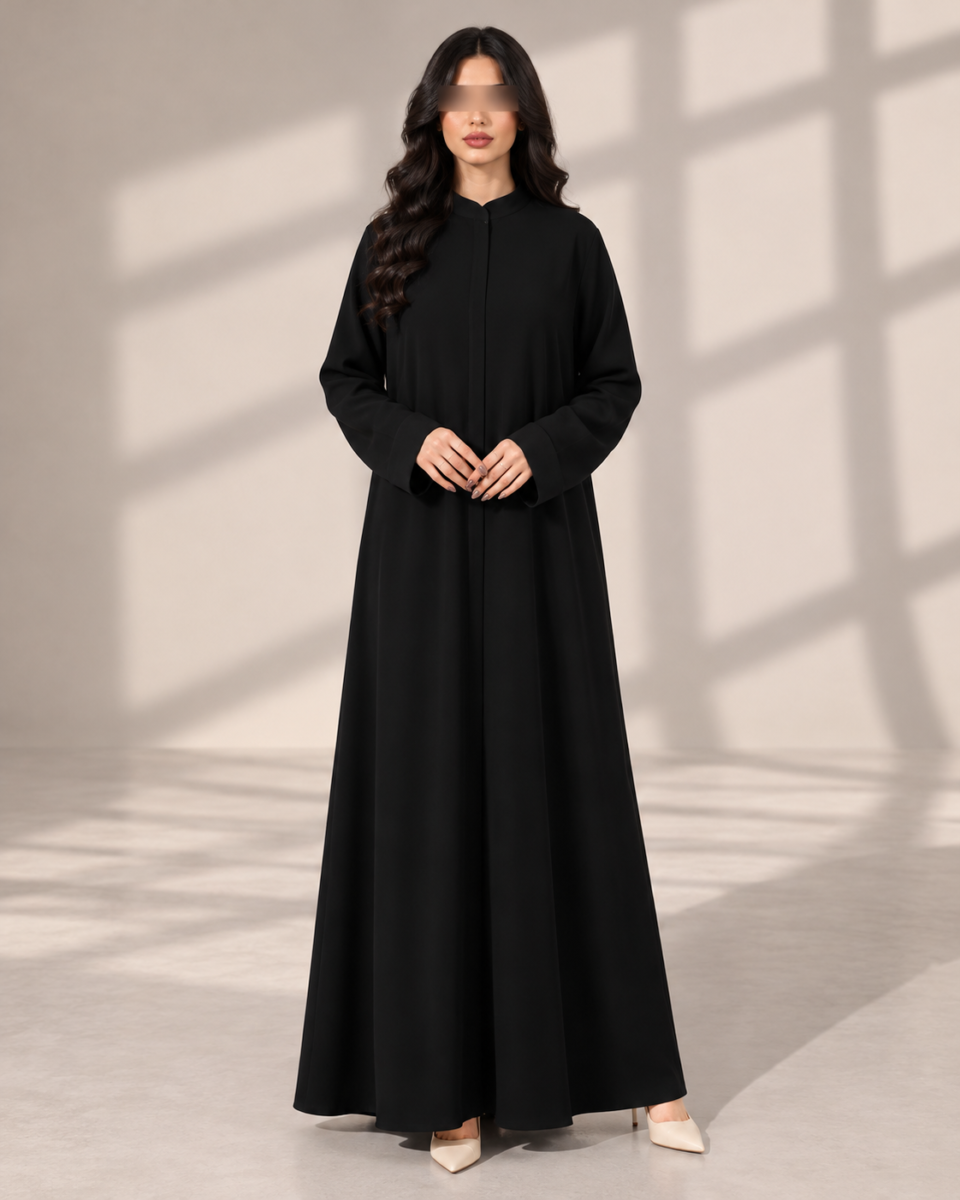
Whether you are walking through a mall, along the street, or around your workplace, a long abaya with a flowing cut is always exposed to this problem. But is the answer to shorten the abaya more than necessary and ruin its cut and luxurious look? Absolutely not!
In this detailed, comprehensive guide, we give you more than 12 practical, tried-and-tested solutions and ideas to protect your abaya hem from dirt and damage, along with ways to deal with damaged edges and keep your abaya with you for years, with all its elegance and deep black color.
Why do abaya hems wear out so quickly? (Understanding the problem is the first step to solving it)
Before we get to the solutions, it helps to know the hidden causes that damage abaya hems quickly without you noticing:
- Direct friction with the ground: Walking on rough surfaces such as asphalt or pavement wears down the fibers at the bottom of the fabric with every step.
- Shoe zips and accessories: Metal buttons, side zips, or rough rhinestones on shoes are the leading cause of fraying or pilling at the bottom of an abaya.
- Dust and grit collecting in the bottom fold: The inner fold of the abaya hem gathers street dust, and when it mixes with moisture or water it turns into dark stains that are hard to clean.
- The abaya billowing in the wind: Very lightweight fabrics fly about as you walk and wrap under your feet or brush against car tires and elevators.
1. Choose a length that suits your movement and shoes
An abaya edge that touches the ground may be more exposed to dirt and friction. Choose a length that suits your movement and shoes, and try walking in it before you approve the alteration.
- Practical tip: Set the length while wearing your usual shoes, and keep the edge far enough from the ground to suit your movement and shoe height. No single clearance suits everyone, so try walking in it before you settle on the length.
2. Add a “protective hem lining” (the tailors’ smartest trick)
This is a professional trick that leading abaya designers use to protect luxury fabrics:
- Ask your tailor to sew a dedicated protective strip on the inside of the bottom fold of your abaya (a strip made of soft reinforced fabric or reinforced chiffon).
- The benefit of this strip is that it takes the friction from the ground or your shoes in place of the main abaya fabric. If it gets dirty or frays over time, you can have your tailor remove and replace it for a very small price, while your abaya itself stays intact and completely new!
3. Use hidden fabric clips
An excellent idea for outings that involve a lot of walking, or for rainy days and wet streets:
- These are small, concealed clips available at sewing supply stores.
- Turn the abaya inside out and raise the hem a few centimeters with the clip so it holds on the inside with nothing showing on the outside. This shortens the abaya temporarily while you walk, and once you arrive you unfasten the clip and it returns to its natural, luxurious length.
4. Avoid shoes with zips and sharp edges
Most tears along the bottom of an abaya are caused by something other than the ground: your own shoes!
- Open zips, rough rhinestones, or a metal buckle on a shoe are the number one enemy of soft abaya fabrics such as crepe and Nida.
- The solution: Choose sneakers or completely smooth shoes with no sharp embellishments when you wear delicate abayas.
5. Wear raised-sole shoes
If you love long abayas that reach your feet and never want to have them shortened by a tailor:
- Raised-sole shoes or chunky sneakers give you an extra 3 to 5 centimeters of height.
- This added height lifts the abaya hem away from the ground and dirt without giving up the length you prefer or your elegant look.
6. The fabric protector spray trick
A great new technology for keeping abayas safe from dust and water:
- Stores carry sprays made to protect fabrics from water, oils, and dust.
- Before using any spray, check that it is suitable for your fabric type and follow the manufacturer’s instructions. Test it on a hidden area first, and make sure the piece is thoroughly dry and aired out; a spray does not necessarily prevent dirt or stains.
7. Choose the right fabric for walking and frequent movement
Fabric type plays a decisive role in how well it resists dirt and tearing:
- Resistance to friction and dirt may vary with the fabric’s weight, composition, finish, and care. No particular material can be identified as tear-resistant from its name alone; examine the fabric and the care label.
- Lightweight fabrics and fine embroidery may need extra care where there is friction, although durability varies with the quality of the material and how it was made. Avoid direct friction and review the care instructions.
8. Double stitching and a weighted abaya hem
A simple request to your tailor makes all the difference:
- Ask your tailor for heavy double stitching along the bottom fold.
- This fold gives the bottom of the abaya a slight weight that keeps it from billowing in the wind and wrapping around your feet when you walk quickly, which lowers the chance of fraying or clinging to the ground.
9. Walk smart and lift your abaya when going up
The way you move accounts for more than half of the problem:
- When climbing stairs, using escalators, or walking in wet places, make a habit of lifting the abaya slightly at the sides with a light touch of your hand.
- Avoid very wide or fast steps, because they make the abaya hem swing more and drag along the ground.
10. The clear fabric tape trick (emergency fix)
If you are traveling or out and discover that your abaya is too long and has been sweeping the ground:
- Use adhesive tape made for fabrics (the double-sided kind).
- If you use fabric tape as a temporary fix, test it on a hidden area first and follow its instructions; it may leave a mark or affect some materials when removed.
11. Deal with dirt properly as soon as you get home
Even if the edges get dirty, quick and correct action saves the fabric from permanent damage:
- If it is dry dust: Do not wash the abaya with water right away! Let it dry completely, then use a soft clothes brush to remove the dust with light strokes.
- If it is mud or an oily stain: Check the care label and stain removal instructions before using water or detergent. Avoid rubbing or applying concentrated detergent before confirming it suits the material, and consult a cleaning specialist if the instructions are unclear.
12. How do you repair abaya hems that have already frayed?
If the worst happens and your abaya hem starts to fray or show fine loose threads:
- Never pull a thread with your hand! Pulling it drags the neighboring threads and damages a long stretch of fabric.
- Use sharp sewing scissors: Very carefully trim the dangling threads close to the fabric.
- Use a fabric shaver: Run a small fabric shaver over the edges so they become as smooth as before.
- Add a lace or cord trim: If the damage is significant, you can take the abaya to a tailor and add a soft lace band or black cord trim around the bottom to cover the damage and give your abaya a new, luxurious design!
Quick care guide for abaya hems
Remembering these simple rules will save you a lot of effort and money:
- The right length: Choose a length that does not touch the ground and suits your movement and shoes, and try walking in it before altering.
- Cleaning dirty edges: Follow the care label for the piece, and avoid rubbing or using water and detergent if the instructions do not allow it.
- Drying method: Hang the abaya on a wide hanger to air dry naturally in the shade.
- Preventive protection: Add an inner protective lining and use a fabric protector spray.
Related articles on abaya care
For more detail on caring for your abaya wardrobe, we recommend these featured articles from our blog:
- Can you use an automatic washing machine for abayas, or is regular washing better?
- What is the right way to prevent abaya fabric from shrinking?
- What is the correct way to wash an abaya and keep it black?
- How do you look after your black abaya?
Article summary
Protecting your abaya hem from damage and dirt does not require shortening it in a way that spoils its beautiful cut. It relies on combining a well-balanced length with a few smart preventive tricks. An inner protective strip, suitable shoes free of sharp edges, fabric protector sprays, and hidden clips are all simple steps that can keep your abaya clean, smooth, and luxurious all day.
Make these tips part of your daily routine, and you will enjoy wearing your favorite abayas in all their elegance, with hems that always stay clean and intact!
Frequently asked questions about abaya hem care
Q1: How do I get rid of stubborn dark stains in the bottom fold of my abaya?
Check the care label and the stain removal instructions for the material first. Avoid soaking, rubbing, or applying concentrated detergent before confirming that the method suits the piece, and consult a cleaning specialist if the instructions are unclear.
Q2: Does having a tailor shorten an abaya affect its cut?
Shortening may affect the cut or the edge details, even when the alteration is minor. If there is embroidery near the bottom, discuss alteration options with a specialist tailor before any cutting, and try the length with the shoes you plan to wear.
Q3: What should I do if my abaya gets muddy while I am out?
Let the mud dry completely on the fabric and do not try to wipe it with a tissue while it is wet, because that spreads the stain and pushes it deep into the weave. Once the mud is dry, loosen it with your hand or a dry brush, and it will crumble and fall away easily.
Q4: Does putting an abaya in a tumble dryer affect its hem?
Yes, very much! High dryer heat shrinks the bottom threads and leaves the abaya hem wavy and uneven. It also weakens the fibers and makes them tear easily.
Conclusion
Your abaya is the signature of your style and elegance wherever you go, and attention to the smallest details, such as keeping its hem clean and intact, is what shows your care and refinement.
Avoid the simple mistakes that can damage your favorite abaya, and use the practical solutions we have shared to enjoy a regal, elegant look every time with as little effort as possible!
If you are looking for a piece that stands up to daily use, take a look at Everyday Abayas and Black Abayas from JELENA.
Summary: How to protect abaya hems
To sum up how to protect abaya hems: comfort, size, and the details of the piece itself are the measure, so compare care instructions, cut, and weight before you decide. To try pieces in person, visit the JELENA abaya store in Jeddah at Al Hijaz Mall, Gate 2, where instant alterations are available. For guidance on choosing, read how to choose an abaya. For general background, see Wikipedia.