In this article
Your travel abaya fabric is what determines your comfort on the plane, in the car, and when you arrive without lengthy ironing. In this guide, we compare weights, textures, and care so you can choose what suits your trip best.
In This Article
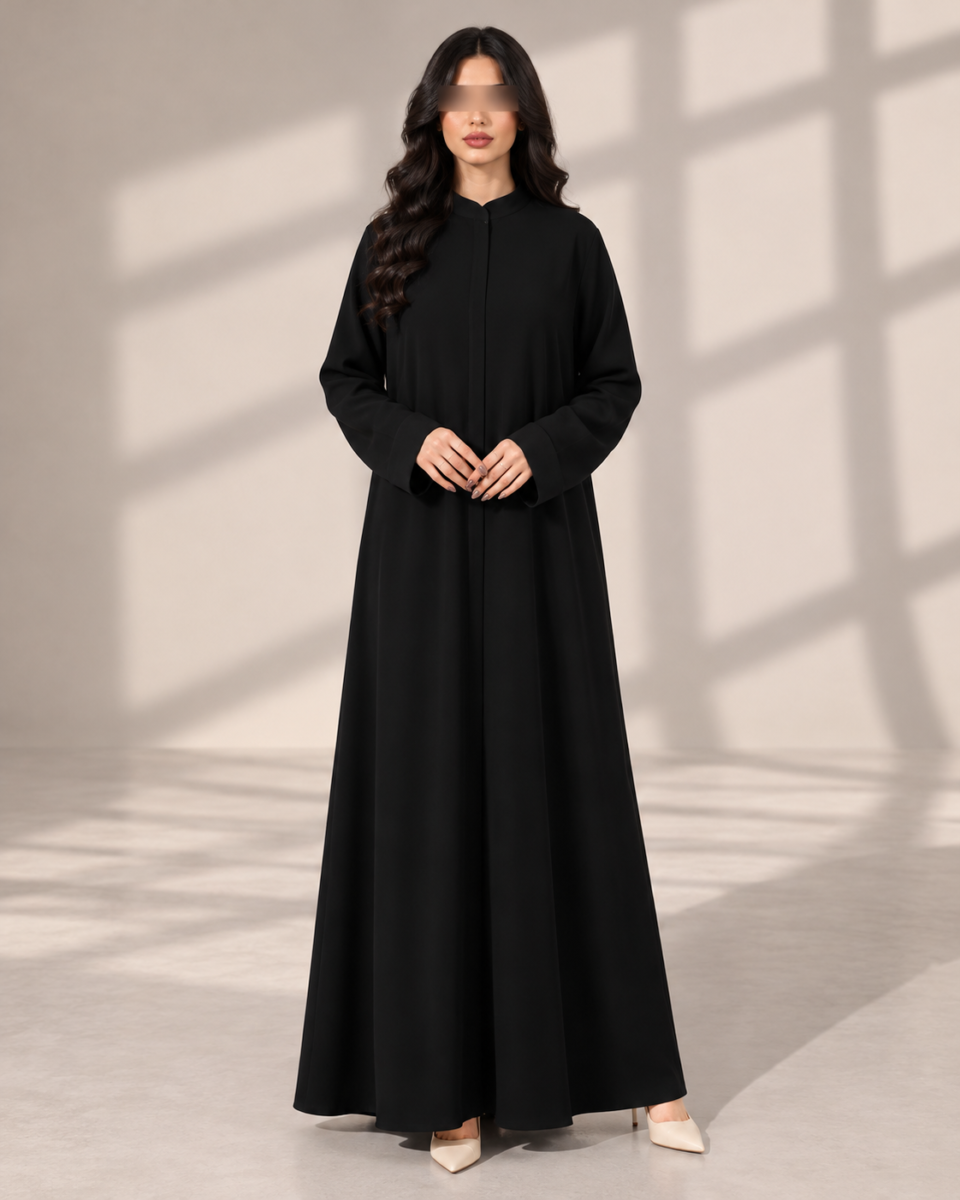
If you have a trip coming up, think about which abaya suits your itinerary and the way you’ll get around. Fabric is an important factor in comfort and care, but the result varies with the material, the cut, the weather, and how long you wear it.
Whether your trip is by plane or car, or includes an occasion, choose your abaya according to how you’ll use it. Start by comparing the piece’s weight, texture, cut, and care instructions, then see the guide to abaya fabric types as a general reference; the properties of the product itself matter more than the fabric name.
In this guide, we look at properties you can compare when choosing a travel abaya, such as weight, texture, and care instructions. Check the description of the specific piece, since fabrics that share the same name may differ.
Why Does Fabric Choice Matter When You Travel?
Travel can involve long periods of sitting and walking. Compare the abaya’s weight, texture, and care instructions against your itinerary and the expected weather; how warm it feels and how much it creases vary with the material and design.
Test whether the cut allows you to move well, and check the care information if easy ironing matters to you. There is no guarantee that a piece will keep its shape after hours of wear or come out of your suitcase crease-free; the result depends on the product and how it’s folded.
For trips of several days, check the care instructions and how easily the piece can be washed and dried under your travel conditions. Don’t assume that every material dries quickly or withstands frequent washing.
Features to Compare in a Travel Abaya
Before you choose, compare these aspects on the abaya itself.
If light packing is a priority, compare the weight of the piece when that information is available, and keep in mind that how heavy something feels differs from one person to another and from one design to another.
For hot destinations, check the material description and the nature of the weave, and choose what you feel comfortable in. A fabric name alone doesn’t guarantee a level of breathability or how warm it will feel.
If minimizing creases is important, look for product information or try folding the piece before your trip; crease resistance varies with the fabric composition and how it’s packed.
Check the care instructions and composition details, and use the recommended cleaning method. Washability and colorfastness can’t be generalized to every piece.
Nida Fabric: What Should You Check?
The name “Nida” alone doesn’t define the fabric’s composition or properties; compare the product description and its actual feel before relying on it for travel.
The fabric’s softness, weight, and drape vary from product to product. If this name is used in a piece’s description, review its details and feel the fabric before you buy.
Compare the sense of weight and movement in the piece itself, and don’t rely on the name alone to predict comfort or crease resistance; these properties differ between products.
Choose pieces according to your plans: one abaya may be enough for some trips, while others call for different options for occasions or weather.
Lightweight Crepe: Compare the Product’s Properties
Crepe is a name that covers many types; examine the material description and the feel of the product instead of assuming that all types of crepe share the same properties.
Crepe’s durability, ease of care, and crease resistance vary with the fabric composition and finish. Check the care label and product information before comparing.
Some crepe designs may suit business trips; compare the cut, comfort, and care instructions with your needs, and don’t assume the look will hold all day.
How well a fabric works with a design depends on the material’s weight, its drape, and the details of the cut; examine the product on offer before choosing.
Japanese Crepe: Check the Product Specifications
If you like the look of this product, compare its description and feel with other designs. The label “Japanese crepe” alone doesn’t prove it’s the best or define its properties.
Check the piece’s specifications and care information; quality, texture, and drape differ among fabrics and products that use a similar name.
Choosing a fabric for meetings or occasions depends on the look of the piece, its care instructions, and your preferences; there is no data here showing how common this use is.
Compare the piece’s weight and freedom of movement; weight or comfort can’t be judged from the fabric name alone.
Linen Blends for Summer Travel
For summer travel, compare the piece’s weight, composition description, and care instructions. A linen blend may be worth comparing if the product details suit you.
Breathability and how warm it feels vary with the composition, weave, cut, and weather; they can’t be confirmed from the name “linen blend” alone.
Crease resistance differs among types of linen blends depending on the composition and finish; check the piece’s description or try it on instead of assuming a single result.
This type can be included among your options to compare for summer travel after reviewing the piece’s composition, texture, and care instructions.
Matte Satin for Occasions While Traveling
Not every trip is about errands or strolling around. Sometimes you have an occasion, a dinner invitation, or even an important meeting, and this is where matte satin comes in.
The look and care of matte satin depend on the type of product and its finish. Compare its feel and care instructions with other pieces, and choose it for the occasion if you like its appearance and it suits your itinerary.
If your trip includes a special occasion, you could pack a matte satin abaya in addition to a practical one for daily wear, so you’re ready for every occasion.
Comparing Fabrics Before You Travel
Not every beautiful fabric is suited to travel, and some fabrics may tire you more than you expect.
If a piece feels heavy when you try it on, it may not suit an itinerary with a lot of walking. Weight and comfort differ between designs; choose based on your own experience and the weather.
Crease resistance varies between products and with the folding method; if ironing will be difficult during your trip, check the piece’s description or try folding it before you travel.
Check the care label before you travel; if its instructions don’t suit your travel conditions, choose a piece whose instructions you can easily follow.
Choosing Fabric by Type of Trip
For short trips within the Kingdom, choose a piece according to your schedule and the weather at your destination. Compare the product itself and don’t assume that a particular type suits every outing.
For a long trip, plan your pieces around activities, occasions, and whether you can do laundry; you may need different options depending on your itinerary.
For hot destinations, compare the material description and weight, and try on what feels comfortable. Neither the fabric name nor its lightness alone guarantees breathability or all-day comfort.
For cold destinations, choose what suits the weather and the clothes you’ll wear underneath, keeping the piece’s weight and freedom of movement in mind.
Choosing the Color of Your Travel Abaya
Choose a color that’s easy to pair with your usual clothes and scarves. How noticeable dirt is and how well the color matches an occasion both vary with use and your preferences.
You may prefer shades such as beige, gray, or olive; try the fabric shade with what you’ll be packing, since a product’s color can look different in different lighting.
What matters is choosing a color that suits how you’ll use it and pairs with more than one scarf or bag, so you get several looks out of it.
Things to Consider Before Choosing a Travel Abaya
Before you travel, look beyond the abaya’s appearance; check the fit, material, and care, and move around in it if you can to find out whether it suits you.
If your itinerary includes walking, choose a cut and size that let you move comfortably. Try walking and sitting instead of relying on one rule for every body.
Plan the number of pieces around the length of your trip, your itinerary, and whether you can do laundry along the way. A few options may be enough for one trip, while another calls for more; there’s no fixed number that suits everyone.
Caring for Your Abaya While Traveling
Fold the abaya according to its material and care instructions, and you can try a garment bag if it’s suitable; how much this reduces creasing varies with the fabric and packing method.
If a suitable place to hang it is available, hang your abaya after you arrive and follow the care label; some creases may ease, but that depends on the material and how it was folded.
If you need to wash it, follow the piece’s own care label, including the detergent, drying method, and appropriate temperature.
Following the care instructions helps you look after the piece during your trip, but its appearance and durability depend on its material, how it’s used, and how it’s cared for.
Summary: Choosing a Travel Abaya
Choosing a travel abaya depends on the cut, material, weather, and itinerary. Compare product properties and care instructions, and choose what suits you.
No documented ranking of the best travel fabrics is available here. Compare the product itself for texture, weight, and care instructions, and choose a material that suits the weather and the plans you’ve made.
Choose an abaya you can move in comfortably, that suits your itinerary, and that you know how to care for. Check its measurements and material description before deciding.
Frequently Asked Questions About Abaya Fabrics for Travel
What’s the best abaya fabric for traveling?
Compare the piece’s weight, texture, and care instructions. Comfort and crease resistance differ between products even when fabric names are similar.
Is crepe suitable for air travel?
Some crepe designs may suit air travel, but shape retention and the need for ironing vary with the product, how it’s folded, and how it’s cared for.
How many abayas do I need for a week-long trip?
The number depends on the length of the trip, your activities, and whether you can do laundry. Plan the pieces you need for occasions and daily wear instead of sticking to a fixed number.
Is black better than colored abayas for travel?
Choose the color that pairs easily with the rest of your clothes and suits your preferences and the trip; no one color is best for everyone.
Does a lightweight fabric mean lower quality?
Not necessarily; light weight alone doesn’t determine quality or lifespan. Check the fabric composition, finishing quality, and care instructions, since durability varies from piece to piece.
For travel, choose from JELENA’s Everyday Abayas or Summer Abayas.
Summary: Choosing an Abaya Fabric for Travel
Choose a travel abaya fabric that is lightweight, withstands folding, and doesn’t crease quickly, in a practical color that hides the signs of the journey. Check the care instructions before you travel so you know how to wash it or arrange it in your suitcase. To learn about fabric types and their properties, read Abaya Fabrics; to try pieces on, visit the JELENA abaya store in Jeddah. For general information, see Wikipedia.
And remember that a good travel abaya fabric is one that serves you in more than one setting: a trip, a family visit, and a short occasion, without your needing to carry more than one piece.